
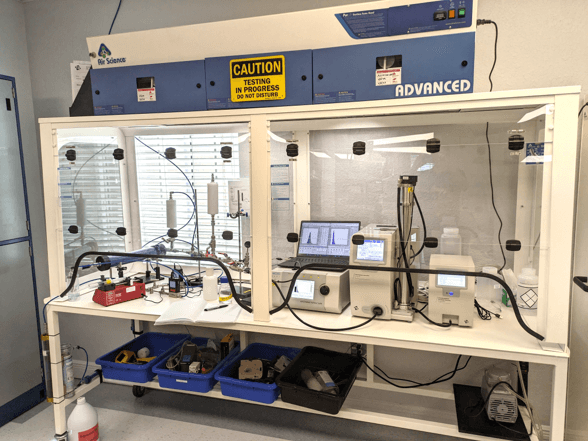
Aerosol Flowthrough Test Bed at Detect-ION
Aerosol Generation & Characterization
From Clean Air to Characterized AerosolWhy Detect-ION built its own aerosol testbed?
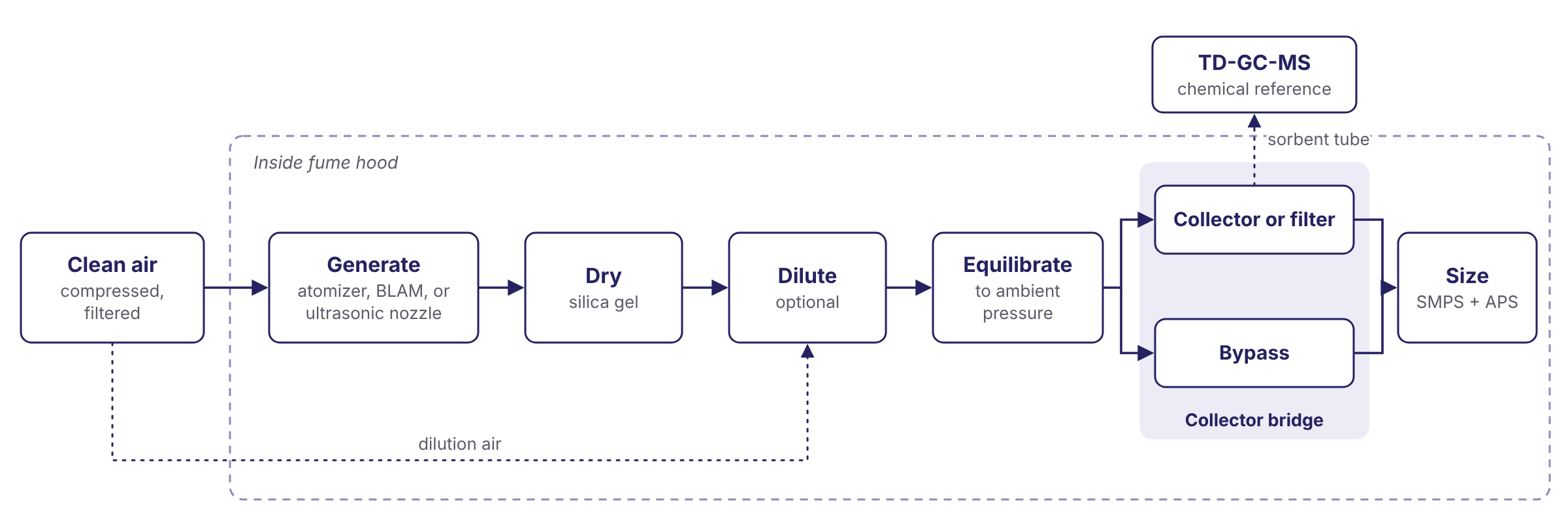
Any device that collects, filters, or detects airborne particles is only as good as the aerosol used to test it. If the size, concentration, or chemistry of the test aerosol is uncertain, so is every result that follows. Detect-ION's Aerosol Flowthrough Test Bed (AFTEB) turns a liquid sample into a known, measured aerosol in one continuous pass. Unlike an aerosol chamber, a flowthrough system delivers a steady particle stream and allows a fast change between aerosolized compounds and their concentrations. This is the path every particle takes, and the instruments it meets along the way.
Supply
Cleaned, compressed air
Generate
Atomizer, BLAM, or ultrasonic nozzle
Condition
Dry, dilute, and equilibrate
Collect
Collector bridge
Characterize
Size, count, and chemistry
Five ways to make a known aerosol
Aerosol Generation
Five generator configurations turn aqueous solutions or solvents into organic aerosols, with particles from 10 nm to 20 µm.
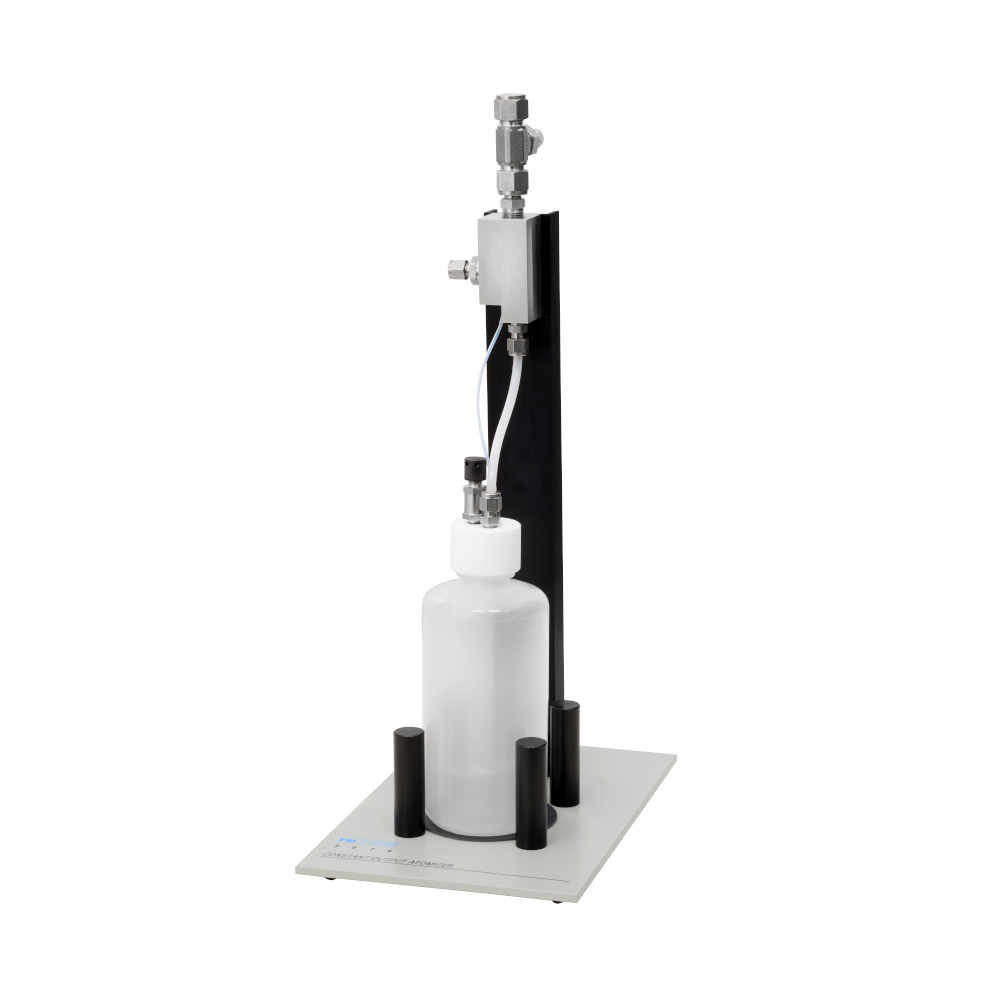
Constant Output Atomizer
TSI MODEL 3076
- Polydisperse aerosols
- Constant particle size
- High concentration
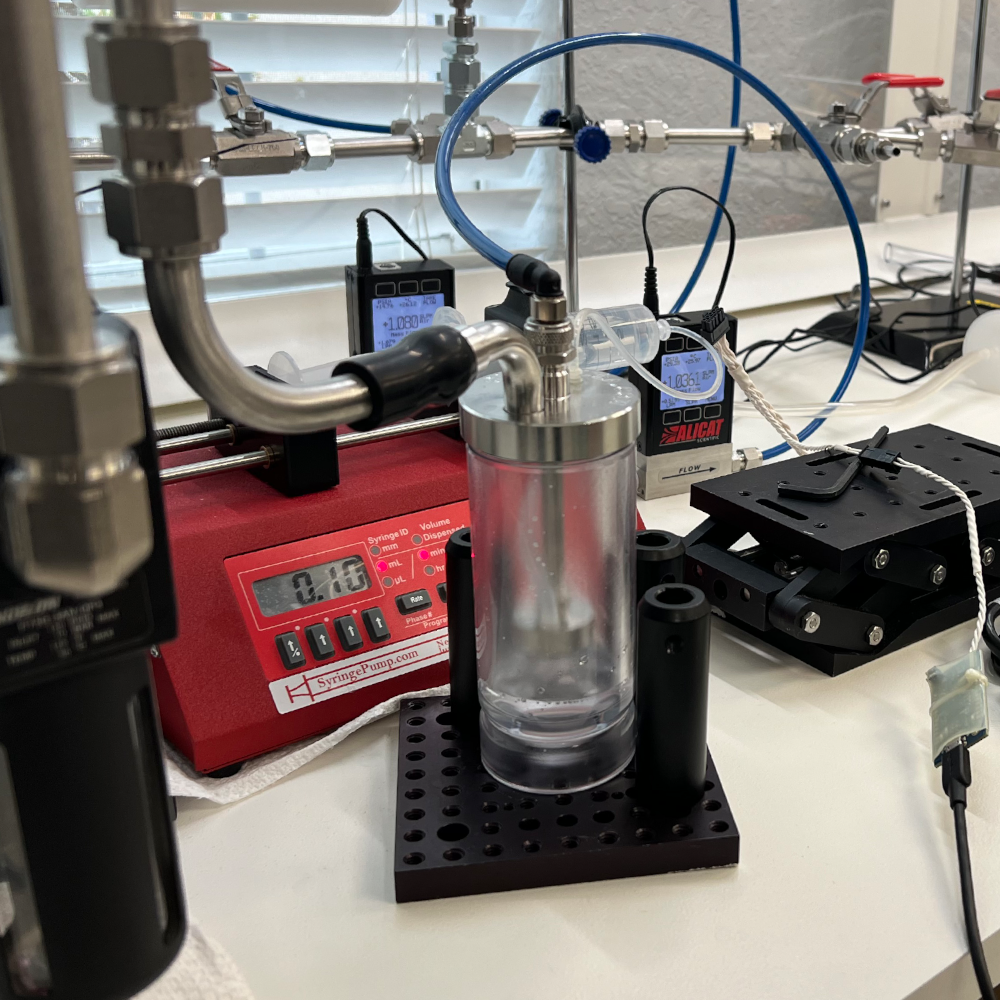
Single-Jet Blaustein Atomizer
BLAM, CH TECHNOLOGIES
- High-efficiency generation with tunable size distribution
- Syringe pump feed
- Fast changes in aerosol composition
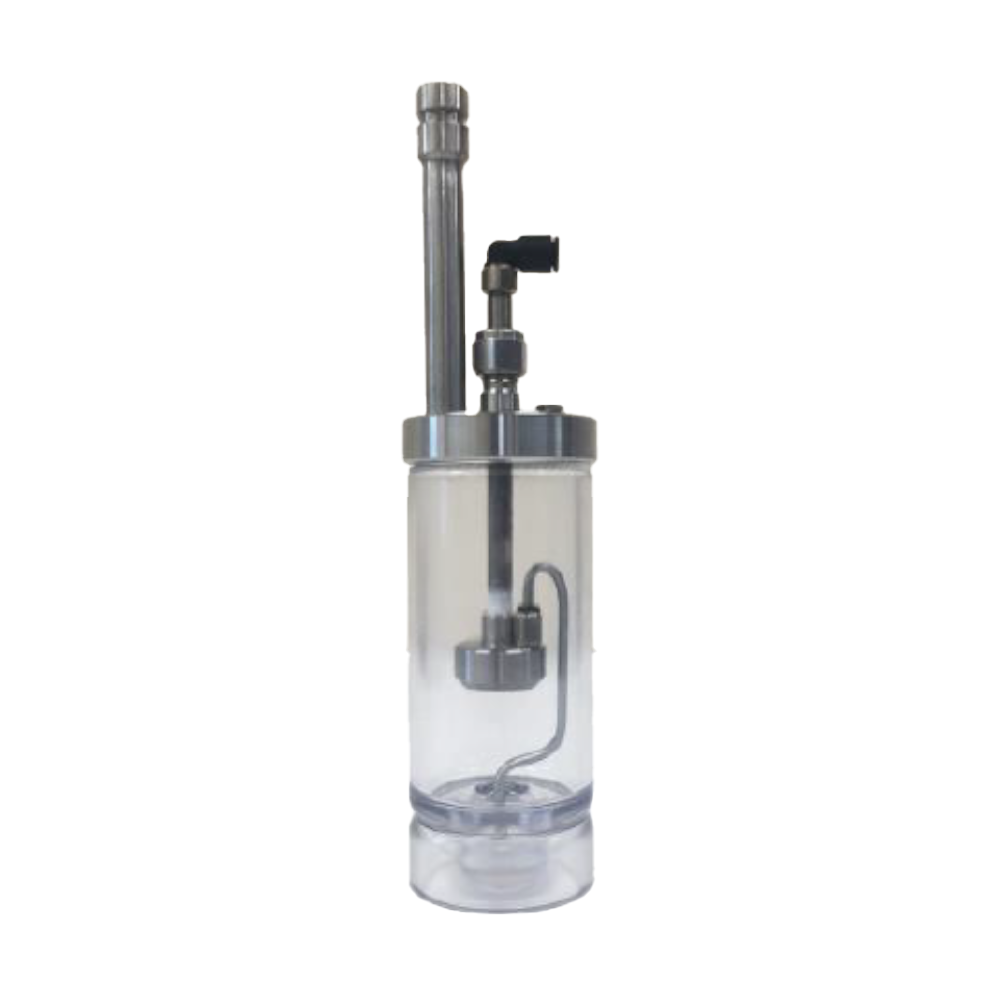
Multi-Pass Blaustein Atomizer
BLAM, CH TECHNOLOGIES
- Recycles the nebulizing solution
- Extended aerosol generation
- Tunable size distribution
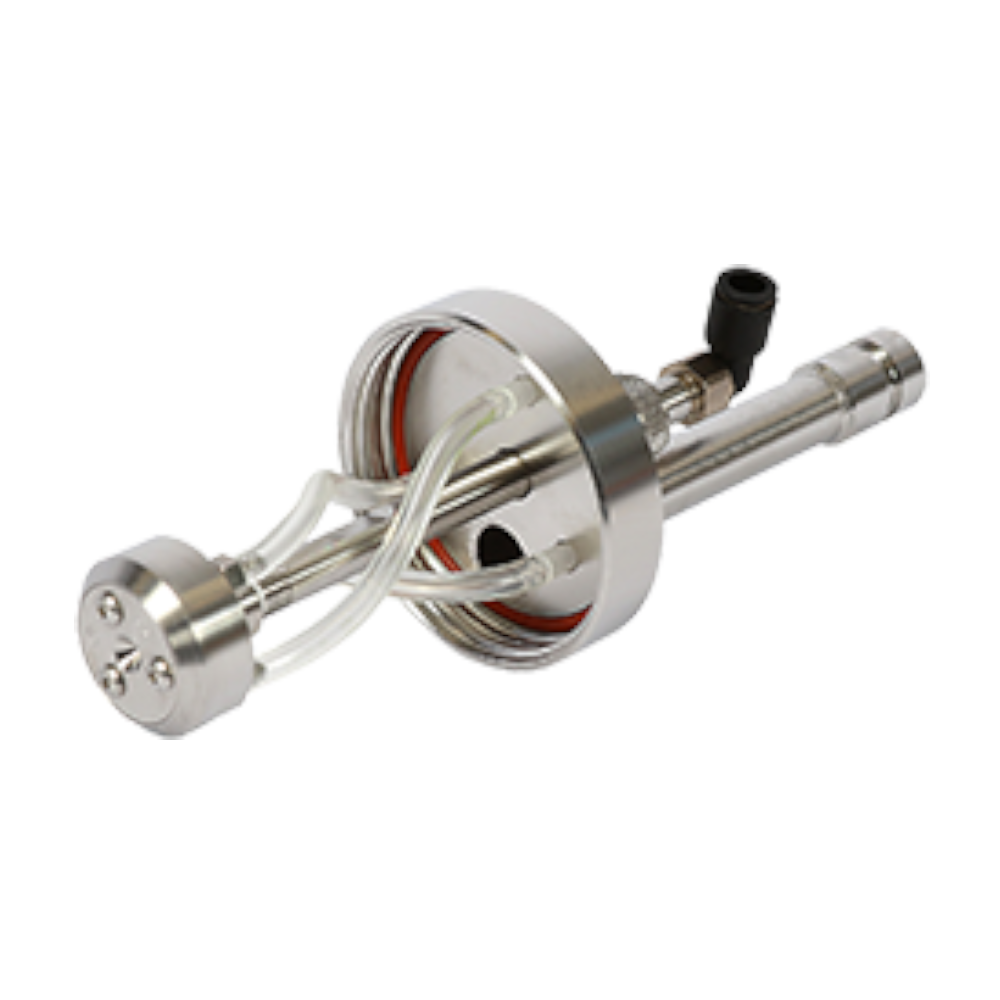
Multi-Fluid Blaustein Atomizer
BLAM, CH TECHNOLOGIES
- Co-generates mixed aerosols
- Up to three compounds
- Varying concentrations
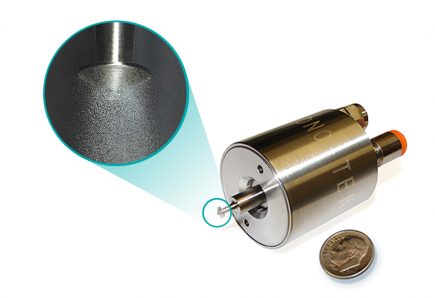
Ultrasonic Atomizer
SONO-TEK, 25 KHZ NOZZLE
- Particles up to 20 µm
- Peristaltic pump feed
- Extends the upper end of the size range
From fresh aerosol to a stream that is ready to measure
Conditioning & Collection
Fresh aerosol is dried, diluted with clean air when needed, and passed through the collector bridge, where a collector or filter can be placed in line.
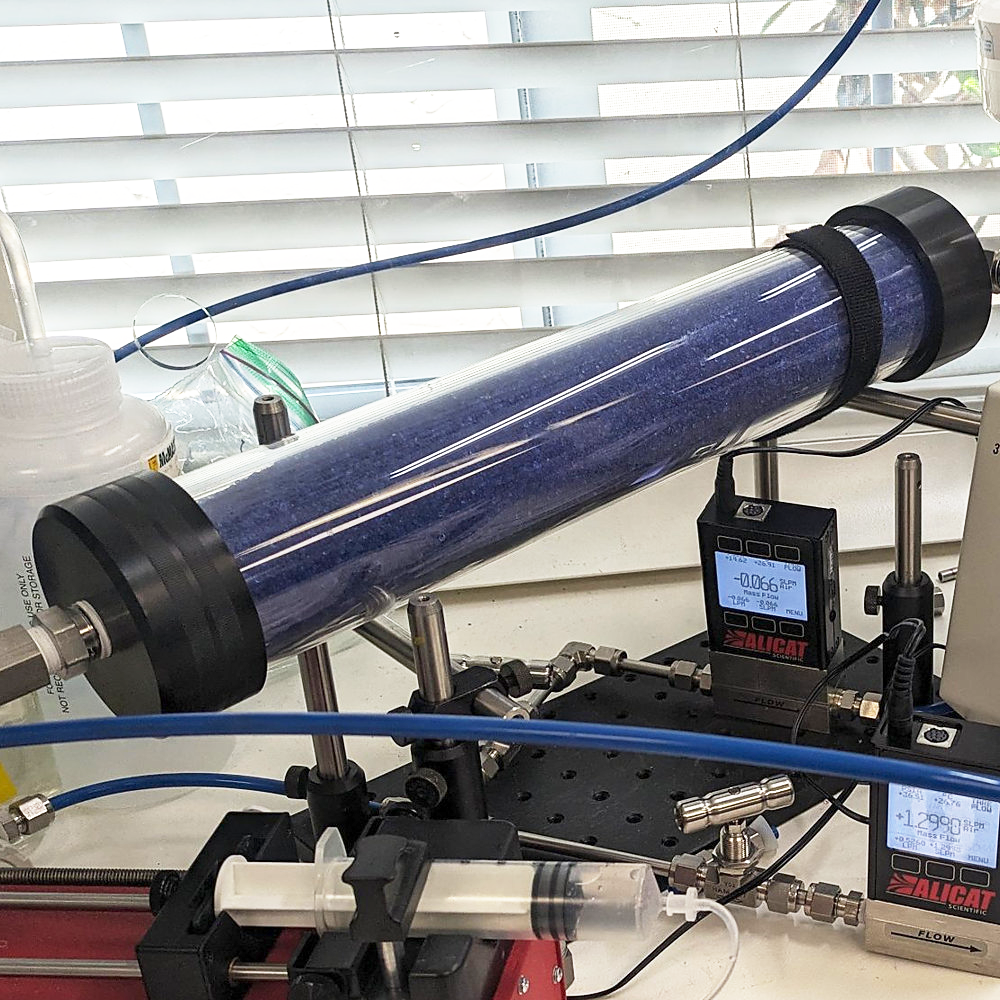
Diffusion Dryer
SILICA GEL
- Dries the aerosol straight after generation
- Delivers dry particles to the collector and the sizers
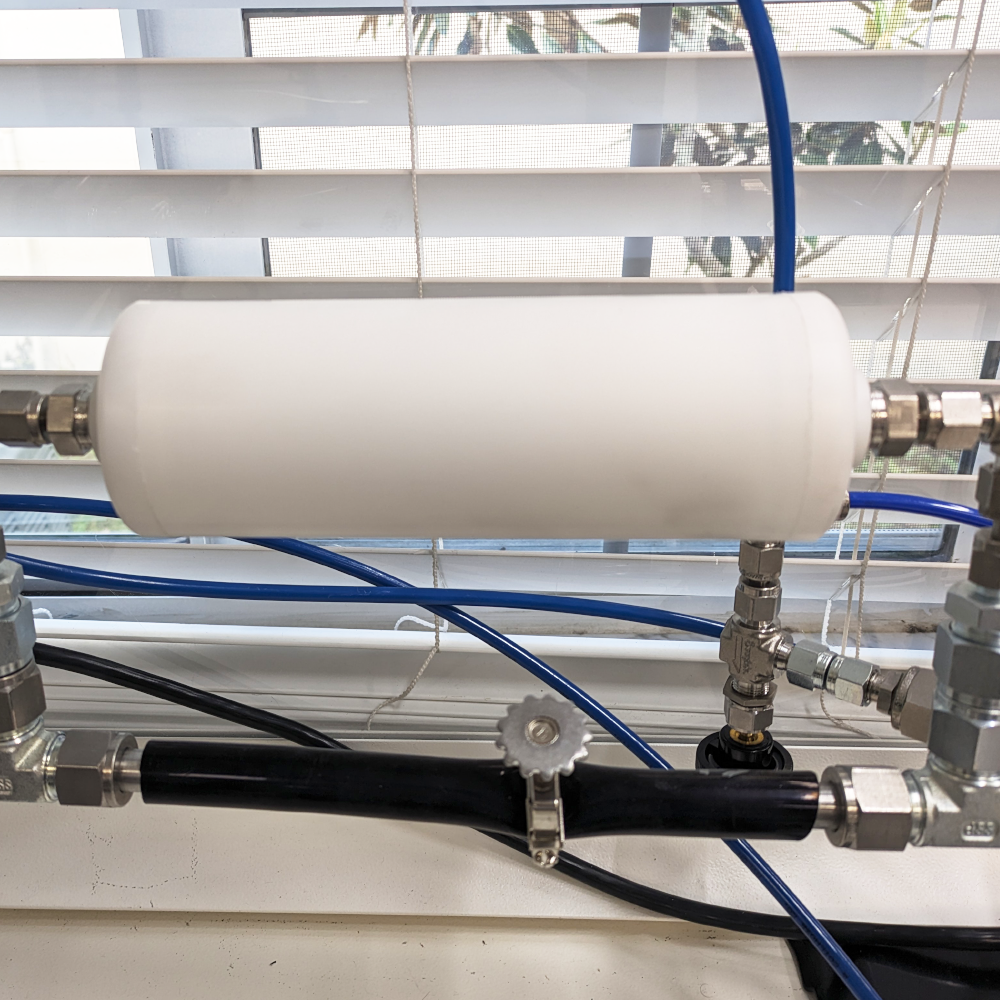
Dilution Bridge
CLEAN, FILTERED AIR
- Optional dilution of the dried aerosol
- Sets the aerosol concentration
- Pressure equilibrated before collection
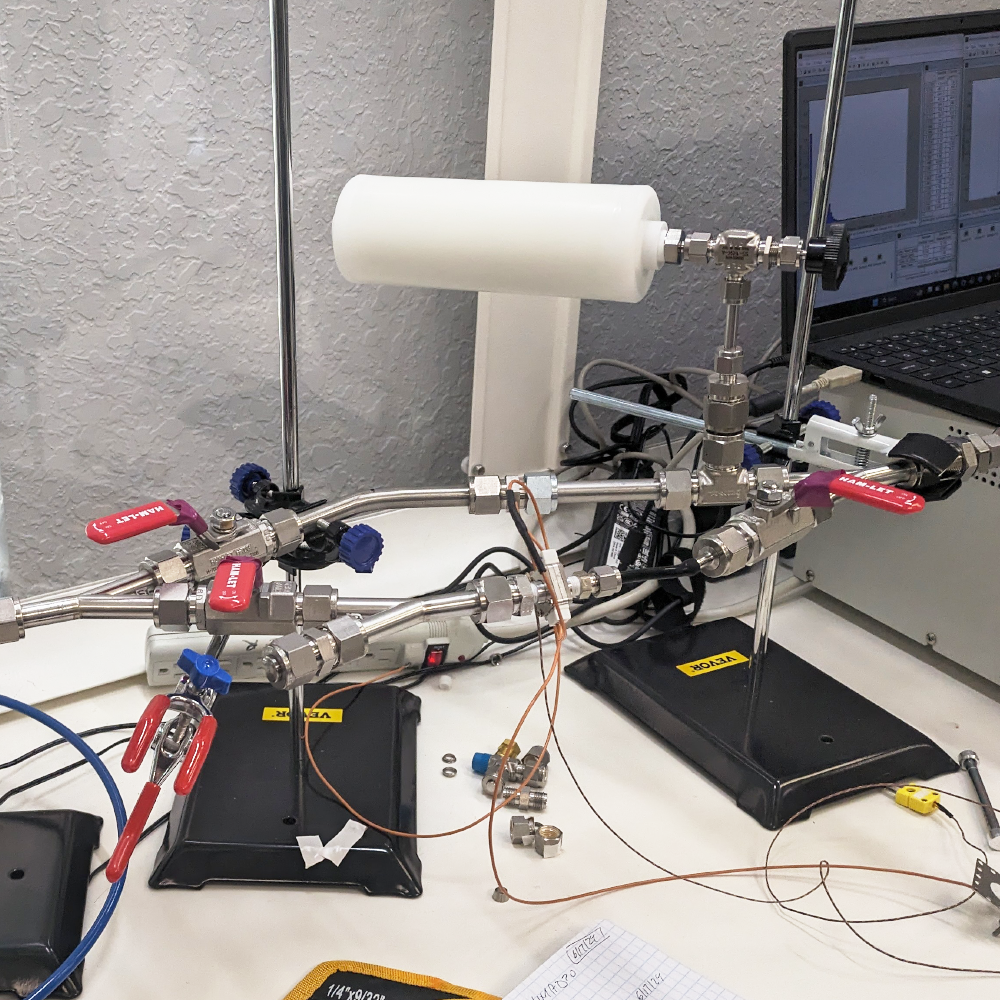
Collector Bridge
DEVICE IN LINE OR BYPASSED
- Holds a collector or filter in the aerosol stream
- Bypass line to size the aerosol without the device
- Efficiency as a function of particle size
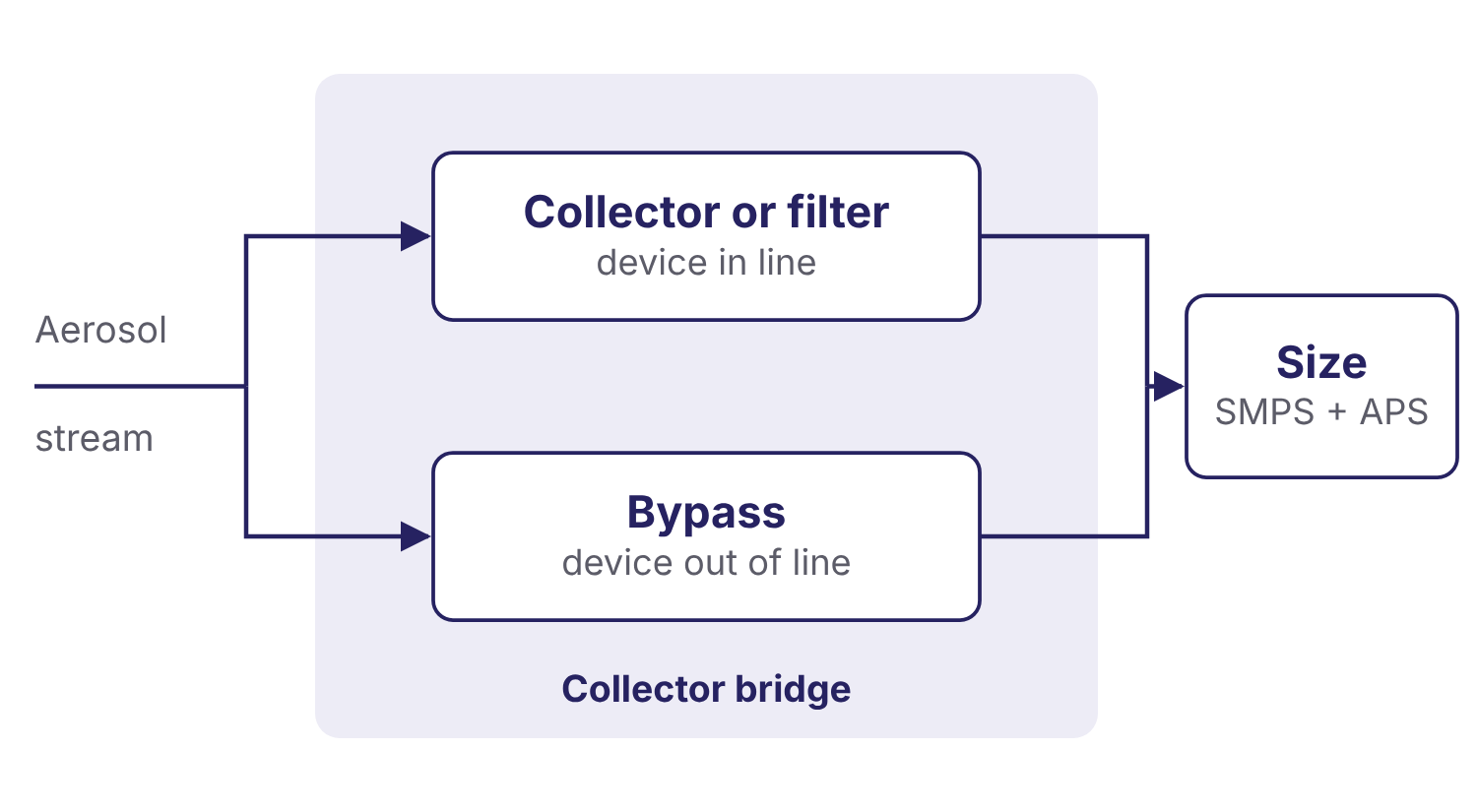
Efficiency as a Function of Particle Size
A collector bridge sits between the generators and the particle sizers. The stream passes through a collector or filter, or bypasses it, so the same aerosol is sized with the device in line and without it. The comparison gives the efficiency of an aerosol collector or filter as a function of particle size.
Size, count, and chemistry on the same stream
Aerosol Characterization
Two particle sizers measure the aerosol from 12.4 nm to 19.8 µm, and sorbent tubes analyzed by TD-GC-MS confirm what it is made of.
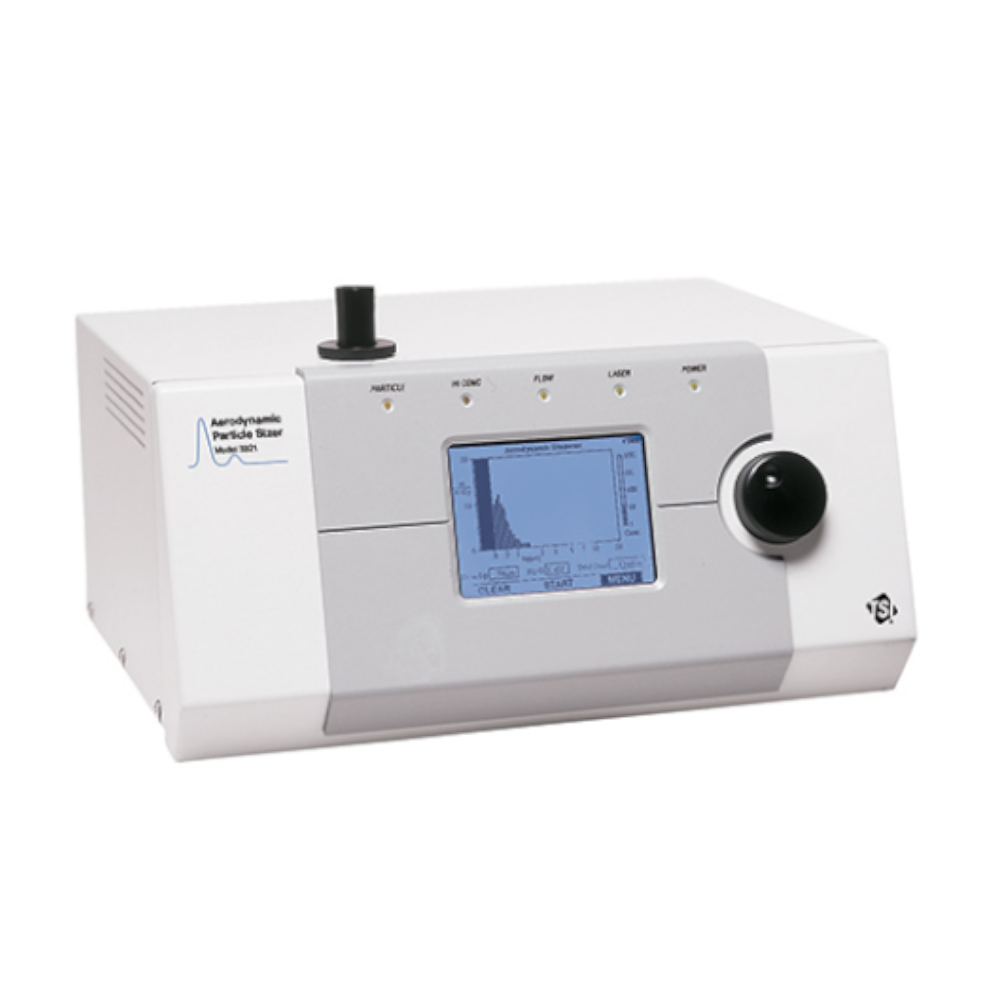
Aerodynamic Particle Sizer
APS, TSI 3321
- 542 nm to 19.8 µm
- Aerodynamic diameter
- Merges with SMPS data into one distribution
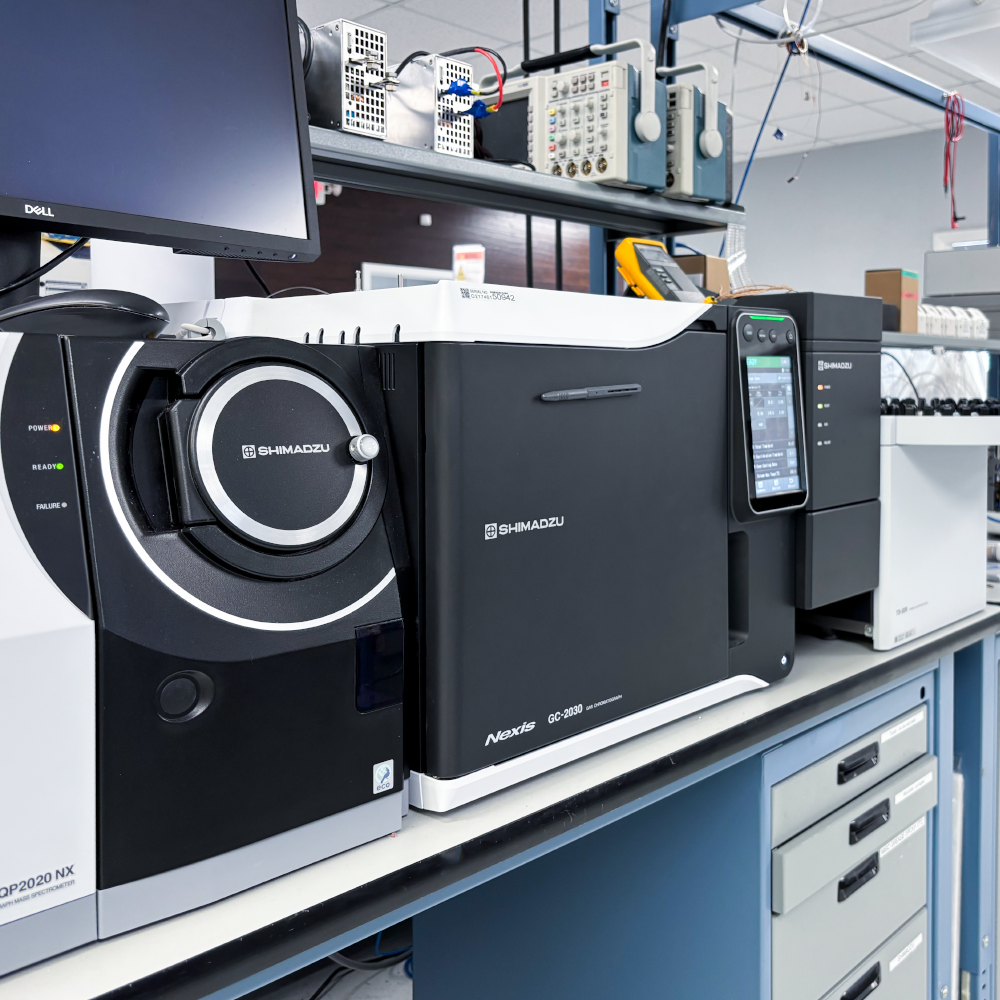
Thermal Desorption GC-MS
Shimadzu QP2020 NX
- Sorbent tubes collect aerosol and vapor
- Chemical ground truth for the aerosol
- Commercial reference instrument
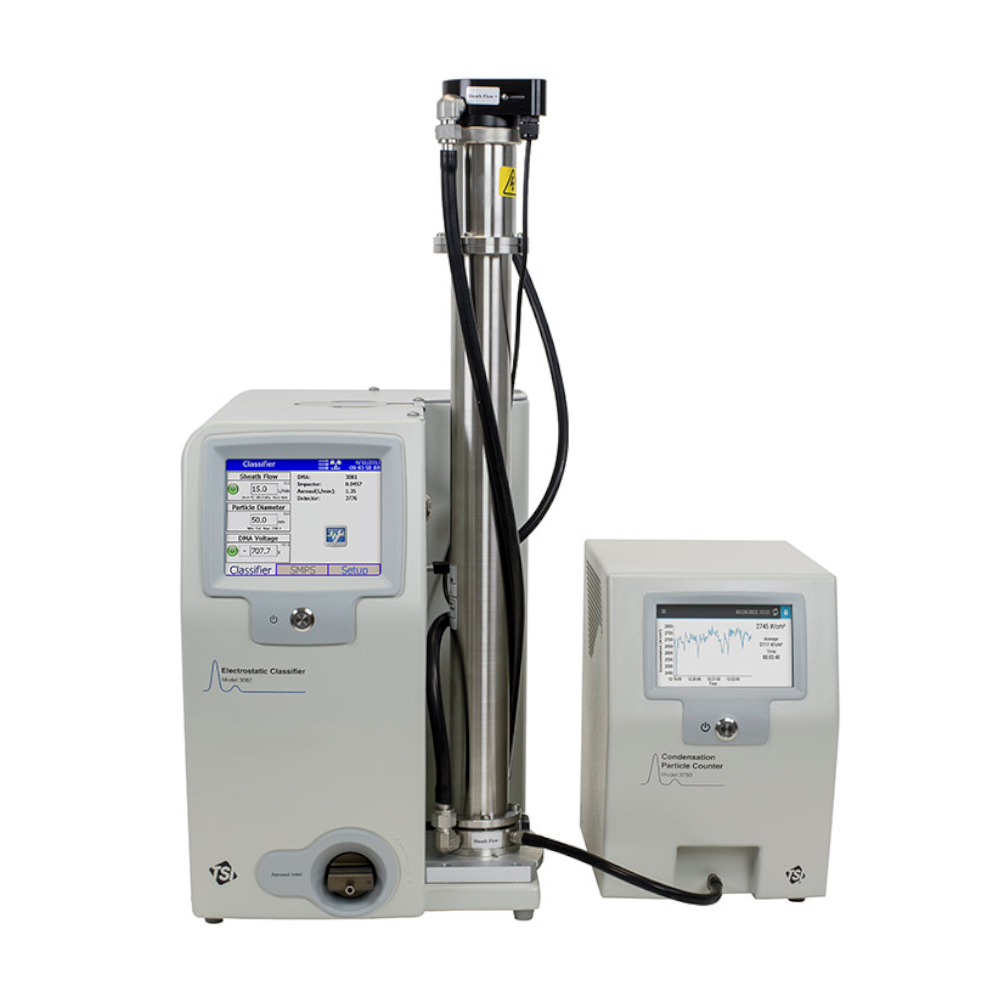
Scanning Mobility Particle Sizer
SMPS, TSI 3938
- 12.4 to 542.5 nm
- Fine and ultrafine particles
- Differential mobility analyzer with condensation particle counter
One aerosol, two sizers, one distribution
Example Run: Caffeine Aerosol
A caffeine aerosol was generated with the Blaustein and ultrasonic atomizers and measured by both particle sizers. The SMPS and APS data merge into a single composite size distribution. Counted particle by particle, the aerosol peaks at 130.3 nm. Weighted by mass, it peaks at 371.2 nm, because the larger particles carry most of the mass.
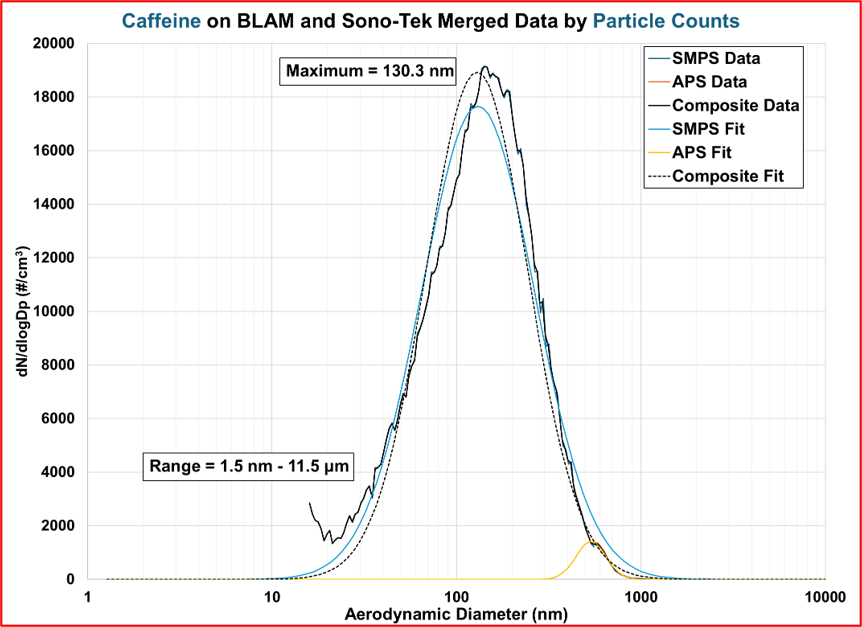
By particle count. Peak at 130.3 nm.
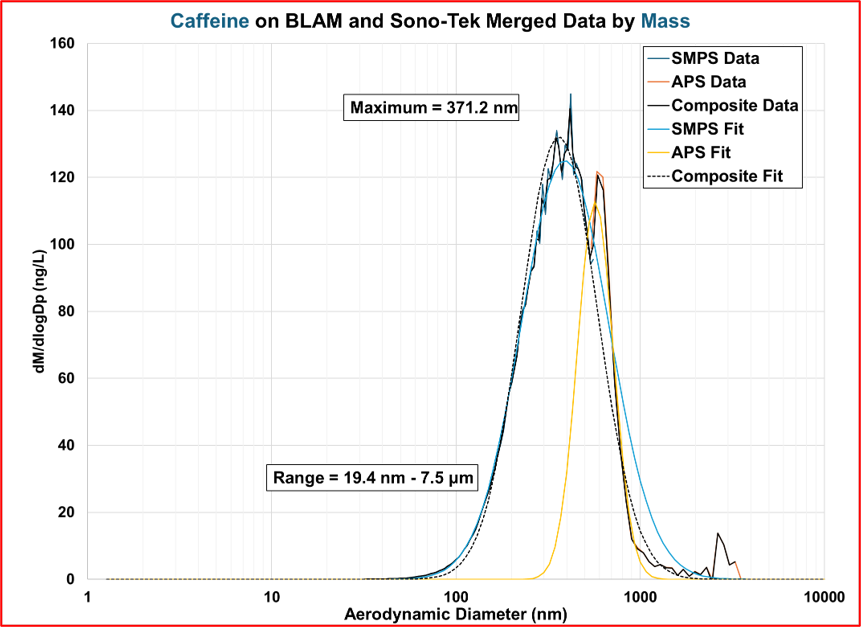
By mass. Peak at 371.2 nm.
Capabilities at a Glance
What We Can Generate:
- Organic aerosols from aqueous solutions or solvents
- Particles from 10 nm to 20 µm
- Mixed aerosols from up to three compounds
- Fast changes between compounds and concentrations
- Extended runs on a recycled nebulizing solution
What We Can Measure:
- Particle size distribution, by count or by mass
- Collector and filter efficiency by particle size
- Collection and desorption efficiencies
- Selectivity, dynamic range, and limits of detection
- Chemical composition, confirmed by TD-GC-MS
Common Questions
To Clear Answers Out
Developing an aerosol collector, a filter, or a detector? Need a known, repeatable aerosol to test it against?
Tell us what you're trying to measure, and we'll tell you what it takes.